1 nJ to 13 µJ Silicon Photodiode Energy Sensor
1 nJ to 13 µJ Silicon Photodiode Energy Sensor
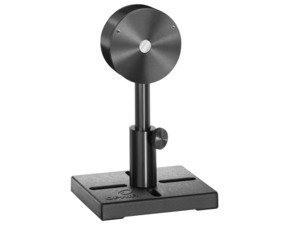
The PD10-C photodiode energy sensor is for low energies with a 10 mm aperture. It can measure energies from 1 nJ up to 13 µJ. It can operate at repetition rates up to 20 kHz and covers the spectral range from 190 to 1100 nm.
- Silicon photodiode with 190 to 1100 nm range
- 1 nJ up to 13 µJ energy measurement range
- 10 mm diameter aperture
- Repetition rates up to 20 kHz
- The PD10-C sensor is not under ISO/IEC 17025:2017 accreditation See All Features
Software
PE-C Sensors with StarLab
Support for PE-C \ PD10-C sensors with Vega, Nova II, Juno, Juno+, Juno-RS, EA-1, StarLite and StarBright in StarLab application is now available. Follow step-by-step instructions to upgrade the embedded software in the PE-C \ PD10-C sensor with the StarLab application
When working with other meters and interfaces it is not necessary to update the embedded software of the PE-C \ PD10-C.
Note: PE-C \ PD10-C sensors can't be upgraded via EA-1 interface..
Specifications
- Product NamePD10-C
- Aperture SizeØ10 mm
- MaterialUV-Silicon
- Spectral Range190-1100 nm
- Minimum Pulse Energy1 nJ
- Maximum Pulse Energy13 µJ
- Maximum Frequency20,000 Hz
- Maximum Average Power50 mW at 800 nm
- Maximum Average Power Density50 W/cm²
- Maximum Pulse Width5 μs
- Cable Length1.5 m
- DimensionsØ62 x 22 mm
- CE ComplianceYes
- UKCA ComplianceYes
- China RoHS ComplianceYes
Features
Measure Very Low Energy Laser Pulses
This video will show you how to overcome the challenges of measuring very low energy pulses, even in a noisy environment.
Sensors for Measuring Laser Energy
In this short "Basics" video, we review in general the use of pyro-electric sensors for measuring laser pulse energies.
How to Detect Missing Laser Pulses with a Pyroelectric Sensor
This video will show you how to detect and record any missing pulses in your pulsed laser beam application.
Additional Error with Frequency in a Pyroelectric Sensor
In many laser energy sensor specifications, there is an item called "Additional error with frequency". Learn what that means, and why and when it happens, in this video.
Frequently Asked Questions
- What is the "User Threshold" feature on the Pyro-C series and how does it work?Answer
The Pyro-C sensors have a "user threshold" feature allowing the user to adjust the measurement threshold in noisy environments. Increasing the threshold will prevent triggering on noisy signals and allow accurate measurment of energy and frequency, as long as the laser pulses are larger than the noise.
The trigger level can be adjusted up to 25% of full scale, however operation depends on the pulse width setting. For pulse width settings below ~0.25ms, the minimum energy that can be measured accurately is approximately 40% above the user threshold setting. Pulses below this energy level will trigger the sensor down to the user threshold level, but accuracy is compromised.
For pulse width settings above ~0.25ms, accuracy is good all the way down to the threshold. If the laser pulse width is less than 1/2 the setting, the minimum energy corresponds to the setting. However, with longer laser pulse widths, the minimum energy will be higher, rising to approximately twice the user threshold level when the laser pulse width is equal to the sensor pulse width setting.
It is recommended always to set the user threshold to the minimum possible setting to retain best energy accuracy in any given situation. See the user manual for further information on how to use the user threshold.
- Can I use a PE-C pyroelectric sensor for higher powers for a short time without the optional heat sink?Answer
The catalog specification states the maximum power a sensor can be used with and without the heat sink. The purpose of the heat sink is to keep the sensor temperature below the maximum permitted at higher average powers. If you use the sensor for a short time only, on the order of 1-2 minutes at a time, you should be able to measure up to the higher power given in the spec even without the heat sink.
- Do I need to recalibrate my instrument? How often must it be recalibrated?Answer
Unless otherwise indicated, Ophir sensors and meters should be recalibrated within 18 months after initial purchase, and then once a year after that.
- Are Pyro-C energy sensors compatible with all Ophir meters?Answer
Yes, with certain limitations. Here are the points to be aware of:
Vega, Nova II, StarLite, StarBright meters and Juno PC interface: Full support of all features
All other instruments (Nova/Orion and LaserStar meters, as well as USBI, Pulsar, and Quasar PC interfaces): Support the Pyro-C sensors, except for the following features: Only 2 of the 5 pulse width settings are available.
User selectable threshold is not available.
In addition to the above: When using a Pyro-C sensor with the Nova (or Orion) meter, the "Nova PE-C Adapter" (Ophir p/n 7Z08272) is required. - Are pyro sensors suitable for power measurement and if so, what is the accuracy?Answer
All Ophir pyroelectric sensors can measure average power with Ophir Power and Energy Meters. The instrument measures the number of pulses each second and multiplies the energy reading by the pulse rate. If the pulse rate is constant, then the accuracy of power measurement will be the same as the energy accuracy since the pulse rate measurement is very accurate.
- In the datasheets of photodiode-based energy sensors like the PD10-C, the lowest measurable energy is given specifically for one wavelength – 900nm. How do I know the lowest measurable energy at MY wavelength?Answer
Let’s look at an example. In the spec of the PD10-C, it gives the lowest measurable energy as 1 nJ at wavelength 900 nm. Let’s say the wavelength you work at is 633 nm. Looking at the relative spectral sensitivity curve for this sensor (shown below), we see that the sensitivity at 633 nm is only about 2/3 of what it is at 900nm (as seen in the attached spectral curve). That means that the lowest measurable energy at 633 nm will be (1nJ / ⅔), or about 1.5 nJ.
- How does the pyroelectric sensor behave for pulsed radiation at a frequency which is over the data sampling rate?Answer
The Power and Energy Meters simply decides it is time for a sample and takes the next pulse that comes after that time, e.g. if it samples at 400 Hz, then every 1/400th of a second it is ready to take the next pulse that comes along.
Accessories
Fiber Connector Adapters
These adapters allow for power measurement of connectorized fiber-optic cables. The sensor may need an additional mounting bracket to connect to these fiber adapters.
| Compare | Description | Drawings, CAD & Specs | Avail. | Price | ||
|---|---|---|---|---|---|---|
 | 7Z08227SC Fiber Connector Adapter, Power and Energy Sensors | |||||
 | 7Z08226ST Fiber Connector Adapter, Power and Energy Sensors | |||||
 | 7Z08229FC Fiber Connector Adapter, Power and Energy Sensors | |||||
 | 1G01236ASMA Fiber Connector Adapter, Power and Energy Sensors |
Fiber Adapter Mounting Bracket
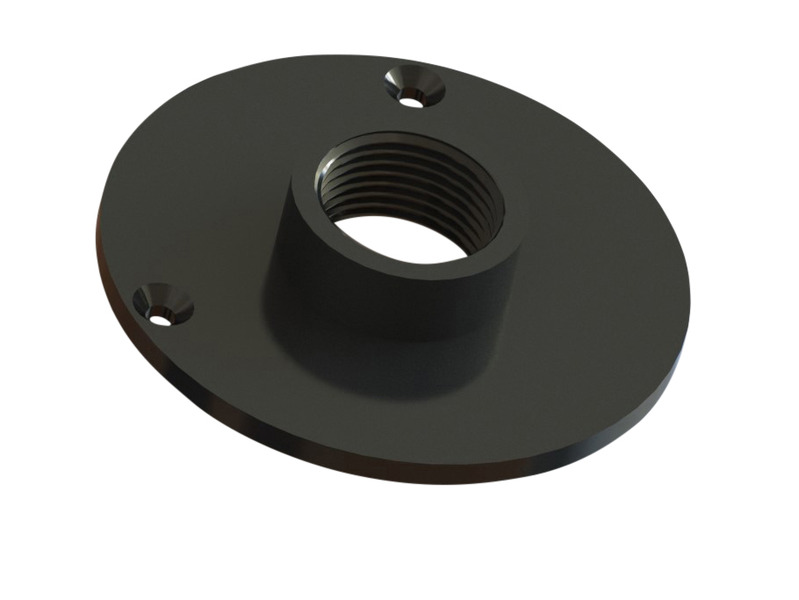
A mounting bracket is needed to connect most power and energy sensors to a fiber adapter (SC, ST, FC or SMA). This bracket can be used for photodiode energy sensors in the PD10 series.
| Compare | Description | Drawings, CAD & Specs | Avail. | Price | ||
|---|---|---|---|---|---|---|
 | 7Z08275Fiber Adapter Mounting Bracket, PD10 Photodiode Energy Sensors |
Nova PE-C Adapter
The adapter plugs between the Nova D15 socket and the smart plug of the PE-C and PD-C sensors to allow the Nova to operate with these sensors.
| Compare | Description | Drawings, CAD & Specs | Avail. | Price | ||
|---|---|---|---|---|---|---|
 | 7Z08272Energy Sensor Adapter, Connect PE-C and PD-C to Nova Meter |
PE-C to PE Size Adapter
The newer PE-C series sensors have a Ø62 mm diameter. The older PE series sensors have a Ø85 mm diameter. This adapter allows using the PE-C type sensors in jigs and setups that were originally designed for PE sensors.
| Compare | Description | Drawings, CAD & Specs | Avail. | Price | ||
|---|---|---|---|---|---|---|
 | 7Z08273PE-C to PE Size Adapter, Ø62 to Ø85 mm |
Fixed extension cables for Pyro Energy Sensors
Order a fixed extension cable along with sensor to receive a different cable than the standard 1.5 m cable.
| Compare | Description | Drawings, CAD & Specs | Avail. | Price | ||
|---|---|---|---|---|---|---|
 | 7E01174AFixed extension cable for Pyro Energy Sensors, 3 m Length, Connect to Power Meter | |||||
| 7E01174BFixed extension cable for Pyro Energy Sensors, 5 m Length, Connect to Power Meter | |||||
| 7E01174CFixed extension cable for Pyro Energy Sensors, 10 m Length, Connect to Power Meter |
Modular extension cables for Pyro Energy Sensors
The extension cables can be ordered separately from the sensors.

Extended Warranty for Sensor
Customers that purchase the above items also consider the following items. Ophir-Spiricon meters and sensors include a standard manufacturers warranty for one year. Add a one year Extended Warranty to your meter or sensor, which includes one recalibration.
| Compare | Description | Drawings, CAD & Specs | Avail. | Price | ||
|---|---|---|---|---|---|---|
 | XWAR-SENSORExtended Warranty for Sensor |
Resources
Data Sheets
Photodiode Energy Sensors 10pJ to 13μJ Datasheet(183.5 kB, PDF) Wavelength and Repetition Rate Chart(178.6 kB, PDF)
Drawings & CAD
PD10-C & PD10-PJ-C Drawing(127.5 kB, PDF)
Catalogs
Energy Sensors Catalog(4.6 MB, PDF) Laser Power & Energy Measurement and Laser Beam Analysis Catalog(27.5 MB, PDF)
Technical Notes
5 Situations Where Laser Performance Measurement is Necessary Effect of Ambient Conditions on Laser Measurements Oscilloscope Adapter for Ophir Pyroelectric Sensors Can Ophir pyroelectric sensors measure single shot energy or energy at very low repetition rates? How to Properly Select a Laser Power or Energy Sensor
Technical Articles
Ophir Power/Energy Meter Calibration Procedure and Traceability/Error Analysis Laser Measurements in Materials Processing